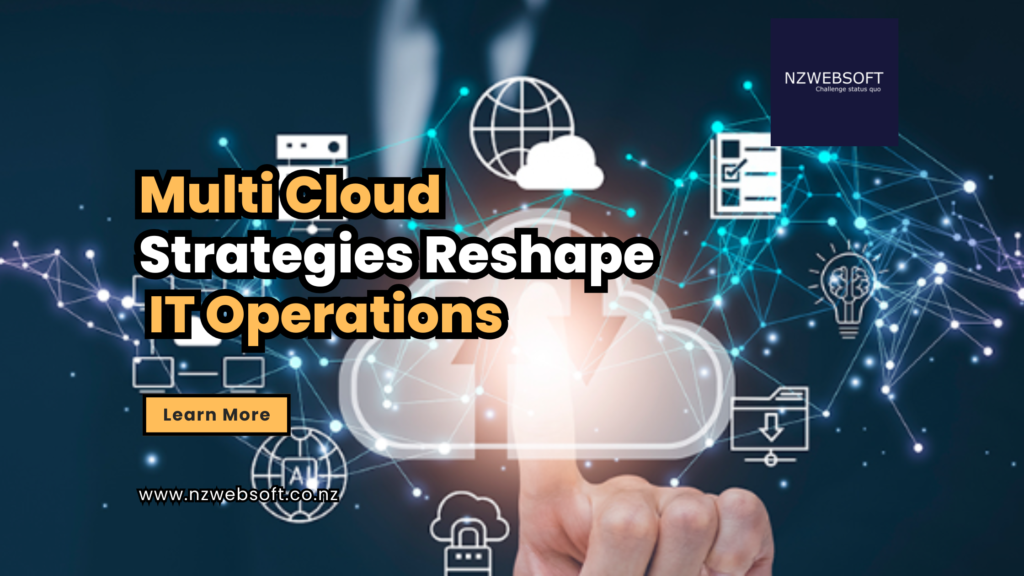
Multi-cloud strategies are reshaping IT operations by giving businesses more flexibility, stronger resilience, and better control over performance and cost. As organizations spread workloads across multiple cloud providers, IT teams can reduce vendor lock-in, improve uptime, and choose the best platform for each workload.
For modern businesses, multi-cloud is no longer just a technical preference. It is becoming a practical operating model for improving agility, resilience, and long-term adaptability.
What Multi-Cloud Means
A multi-cloud strategy means using services from more than one cloud provider rather than relying on a single vendor. One provider may be better for analytics, another for storage, and another for application hosting.
This approach helps IT teams combine the strengths of different platforms while avoiding dependence on one ecosystem. For many businesses, that makes multi-cloud a smarter long-term fit for IT operations.
Why IT Operations Are Changing
Greater flexibility
Multi-cloud gives IT teams the freedom to place workloads where they perform best. That makes it easier to scale quickly, support new business needs, and adapt to changing market conditions.
Better resilience
By distributing systems across multiple cloud environments, organizations reduce the risk of a single point of failure. If one provider has an outage, critical services can continue running elsewhere.
More cost control
Multi-cloud also helps businesses compare pricing and match workloads to the most cost-effective platform. With the right tools, teams can monitor usage, forecast spending, and avoid paying for underused resources.
Key Operational Benefits
Improved performance
Different cloud providers often excel in different areas. A well-designed multi-cloud setup allows IT teams to route workloads to the platform that offers the best speed, reliability, or geographic reach for each task.
Reduced vendor lock-in
One of the biggest advantages of multi-cloud is independence. Businesses can avoid overreliance on a single vendor’s roadmap, pricing changes, or service limits, which improves negotiating power and long-term flexibility.
Faster innovation
Multi-cloud strategies make it easier to adopt new tools and services as they emerge. Instead of waiting for one vendor to add a feature, teams can use best-in-class services from different providers to support innovation faster.
Challenges IT Teams Must Manage
Added complexity
Managing multiple clouds can increase operational complexity, especially when teams must coordinate identity, security, governance, and monitoring across platforms. Without strong processes, multi-cloud can become fragmented and harder to control.
Security consistency
Each cloud platform has its own controls and policies, so IT teams need a unified security approach. Consistent governance, access management, and visibility are essential to keep data protected across all environments.
Skills and tooling gaps
A successful multi-cloud environment usually requires better automation and centralized monitoring tools. IT teams also need the right skills to manage workloads intelligently across platforms and keep costs, performance, and compliance in balance.
Best Practices for Success
Build a clear cloud strategy
Start with business goals, not just technology trends. Define which workloads belong in which cloud, why each provider is being used, and how success will be measured.
Centralize management
Use management tools that can automate workload placement, track costs, and provide visibility across environments. Centralized management is one of the most important factors in turning multi-cloud into a practical operating model.
Prioritize governance and security
Create consistent policies for identity, access, data protection, and compliance across all clouds. This reduces risk and helps IT teams maintain trust as the environment grows.
Monitor and optimize continuously
Multi-cloud is not a set-and-forget strategy. Teams should regularly review workload performance, costs, and resilience so they can adjust architecture as business needs change.
Multi-Cloud and E-E-A-T
For content and operations alike, multi-cloud success depends on trust, accuracy, and expertise. Businesses that document their architecture, track measurable outcomes, and use reliable providers show stronger authority and credibility in both technical execution and customer communication.
How NZWebSoft Can Help
NZWebSoft can help businesses plan and communicate their multi-cloud journey with clear strategy, SEO-friendly content, and digital marketing support that builds trust. For companies needing stronger online visibility around cloud, IT operations, cybersecurity, or managed services.
If your organization is exploring multi-cloud adoption or wants to improve its existing cloud strategy, now is the time to act.
Partner with NZWebSoft to create and position your business in a trusted cloud and technology environment.